Phoenix Metro • Free Quotes
Concrete Repair & Surface Prep
The floor under the coating decides everything — diamond grinding, crack and spall repair, and moisture testing done right.
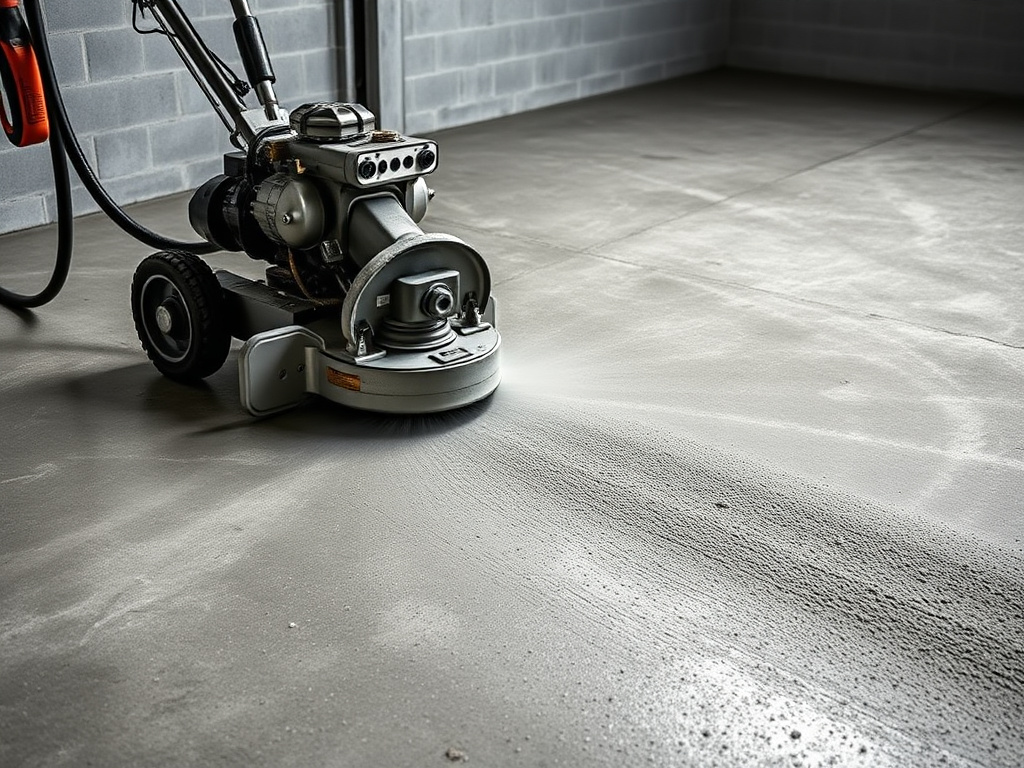
Surface prep is the whole ballgame. The large majority of coating failures in Arizona are not product failures — they are prep failures, floors that peeled, bubbled, or lifted because the concrete underneath was never properly profiled, repaired, or moisture-tested. We treat prep as the job, not the setup for the job: diamond grinding to a measured profile, honest crack and spall repair, and moisture testing before a drop of coating goes down.
80%
Failures Are Prep
The large majority of coating failures trace back to the slab, not the coating brand.
CSP 2-3
Profile Target
We grind to a concrete surface profile that gives the coating a mechanical grip.
Tested
Moisture First
Every slab is checked for vapor drive before we coat, so it bonds and stays down.
Why Most Coating Failures Are Prep Failures
When a garage floor coating peels, the coating almost never failed on its own. It let go because it was never truly bonded to the concrete, or because it was coating over a crack, a wet slab, or a contaminated surface that was doomed from the start. Adhesion is a property of the substrate as much as the coating, and a great topcoat over bad prep is still a bad floor.
This is why we spend most of a job on prep. A coating can only grip what it is given. Give it a clean, sound, correctly profiled slab and even a modest system lasts for years; give it a smooth, dusty, or damp surface and the best chemistry on the market will lift.
Understanding this changes how you should read quotes. A cheap bid usually means skipped prep, and skipped prep is exactly what fails. The money that makes a floor last is spent below the coating, not on it.
Diamond Grinding vs Acid Etching vs Shot Blasting
To bond, a coating needs a concrete surface profile, or CSP — essentially controlled roughness that gives the coating mechanical teeth to grip. There are three common ways to create it, and they are not equal. We grind for a reason.
Acid etching is what big-box kits recommend because it needs no equipment, but it only lightly opens the surface, cannot remove old coatings or oil, and leaves residue that undermines the bond. Shot blasting throws steel media to aggressively profile large industrial slabs, but it can leave a coarse tracked pattern that telegraphs through a thin residential floor. Diamond grinding — our standard — mechanically abrades the slab to a clean, consistent CSP 2 to 3, removes old paint and contamination in the same pass, and controls the dust.
| Method | How It Works | Profile | Removes Old Coatings | Our Take |
|---|---|---|---|---|
| Acid etching | Chemical bite | Light, inconsistent | No | Kit-grade, leaves residue, weak bond |
| Shot blasting | Steel media impact | Aggressive | Yes | Great for industrial, can track on thin floors |
| Diamond grinding | Mechanical abrasion | Clean CSP 2-3 | Yes | Our standard for residential and commercial |
Crack, Spall, and Pitting Repair Before Coating
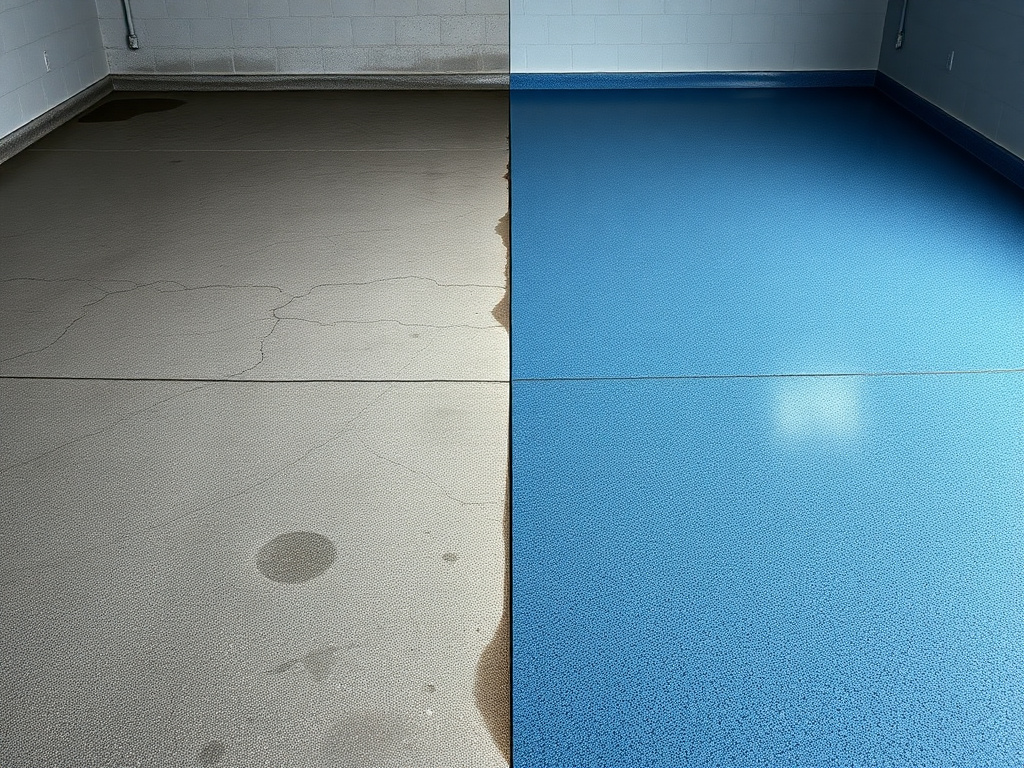
A coating cannot bridge a moving crack or fill a deep spall on its own — those flaws telegraph through and become the first place the floor fails. Before any base coat, we repair the concrete so the coating goes over a sound, continuous surface.
We match the filler to the defect, then re-grind the repair flush so the finished floor is level and the repair is bonded, not just cosmetic.
- Hairline and static cracks — chased open and filled with a rigid polymer repair resin, then ground flush.
- Wide or moving cracks — routed into a V, filled, and reinforced so movement does not reopen them through the coating.
- Spalls and chips — the loose material is removed and the void rebuilt with a structural patch compound.
- Pitting and surface voids — skim-filled so the base coat has a continuous surface to bond to.
- Control joints — filled or honored by design depending on the slab, so they do not crack the coating.
Moisture Testing: The Hidden Reason Coatings Peel
Concrete looks dry, but many Arizona slabs quietly push water vapor up from the soil beneath them, especially slabs poured on grade without an intact vapor barrier. That vapor drive is invisible until it forces a freshly bonded coating right off the surface, and it is one of the most common hidden causes of a peeling floor.
We test for it before we coat. A calcium chloride test measures how much moisture the slab is emitting, and a relative-humidity probe reads the moisture deep inside the concrete. If the numbers are high, we address it — with a moisture-tolerant vapor-barrier primer or the appropriate mitigation — rather than coating over the problem and warranting a failure.
This single test is the difference between a floor that lasts and a callback. It costs little and it is not optional on a slab we cannot vouch for.
Can You Coat Cracked or Old Concrete?
Yes — old and cracked concrete is exactly what a good coating system is built to renew, and most of the garages we transform were cracked, stained, or dusting before we started. The key is that we make the slab bond-ready first rather than coating over its flaws.
For an aged slab that means grinding through years of sealer, paint, and oil to reach clean concrete, repairing the cracks and spalls so they do not reappear through the finish, and moisture-testing to catch vapor problems common in older on-grade pours. Once the slab is sound and profiled, it accepts a coating as well as new concrete does.
There are limits, and we will tell you honestly if a slab is too structurally compromised to coat rather than sell you a floor that cannot succeed. But the ordinary cracks, stains, and pitting of an Arizona garage are routine — we fix them and coat over them every week.
What Proper Prep Adds to the Job
Proper prep is the largest share of the labor on a quality floor, and it is where the honest money goes. Grinding, repairing, cleaning, and testing a slab takes hours of skilled work with real equipment, and it is precisely the work a lowball bid leaves out to hit a cheaper number.
It is worth every dollar because it is the part that determines whether your floor lasts fifteen years or fifteen months. The coating is almost a commodity; the bond is not. Paying for prep is paying for the only thing that makes the coating stay on the concrete.
When you get a quote from us, the prep is itemized and it is real. Call 844-967-5247 for a free on-site assessment, and we will show you exactly what your slab needs and why — before we ever mix a coating.
Common Questions
Concrete Repair & Prep FAQs
Straight answers from a Phoenix floor-coating contractor. More on our full FAQ page.
Have a different question? Read all our FAQs or see our 2026 polyurea vs epoxy guide.
Related Services
You Might Also Need
Garage Floor Coating
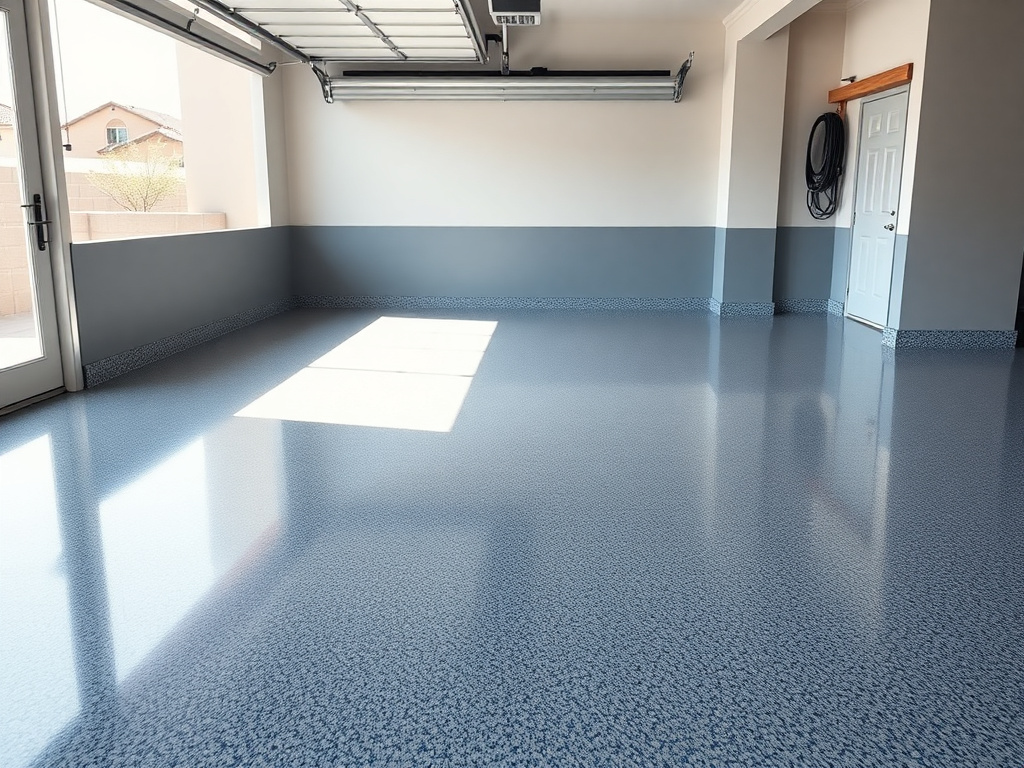
A full flake-and-topcoat system that turns dull, stained concrete into a glossy, hot-tire-proof floor — installed in a single day.
Epoxy Floors
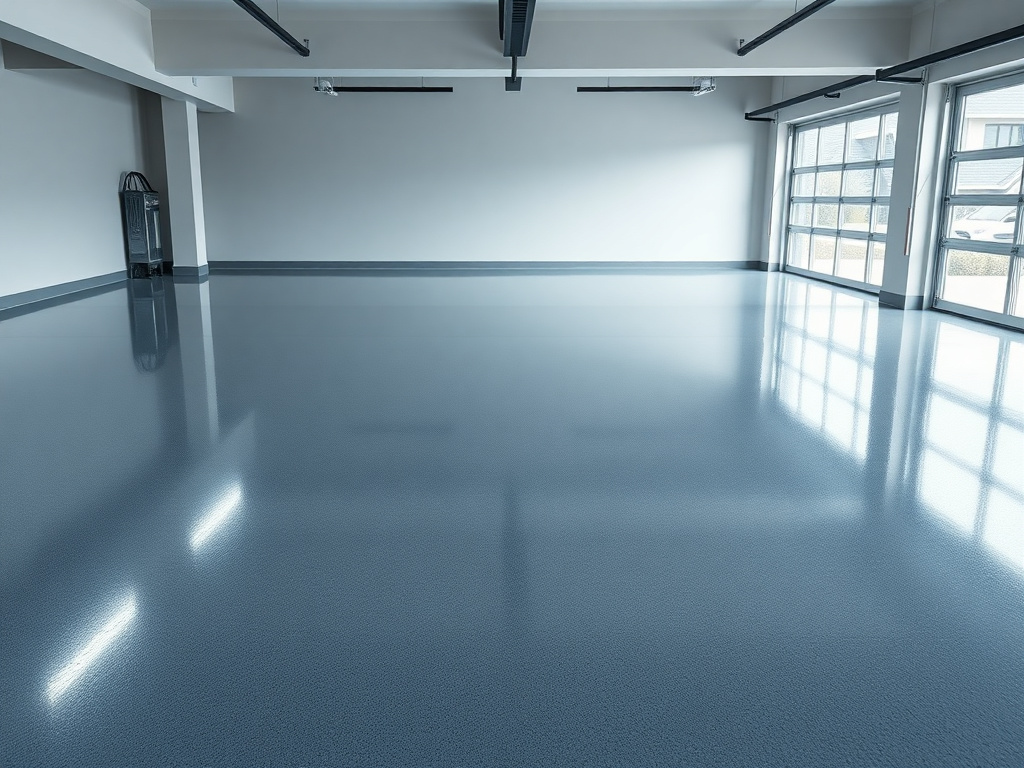
Epoxy done right — with the diamond grinding, moisture testing, and UV-stable topcoat that separate a 10-year floor from a peeling one.
Polyaspartic 1-Day
The fast-cure, UV-stable system we grind, coat, and topcoat in one day — walk on it in hours, park on it tomorrow.
Ready for a Floor That Beats the Arizona Heat?
Get a free, no-pressure quote for your garage, patio, pool deck, or commercial floor. We diamond-grind, moisture-test, and install a UV-stable, hot-tire-proof coating — most residential floors done in a single day.